Which Titanium Pan Is Right for Me?
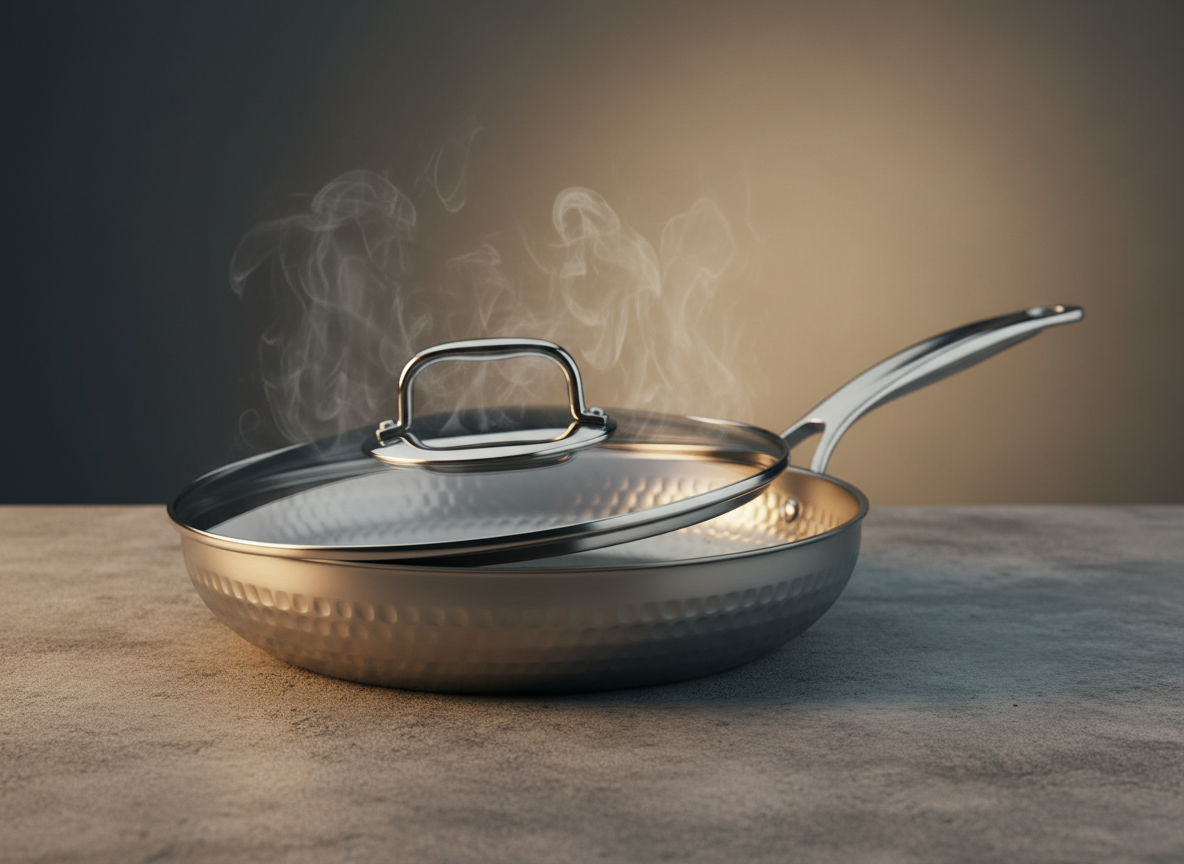
Quick Answer
The right titanium pan depends on what you cook most. This guide compares the frying pan, wok, sauté pan and crepe pan by cooking style, shape and everyday use to help you choose.
How to Choose the Right Titanium Pan
Choosing the right pan comes down to what you cook most often. Each pan shape is designed for specific cooking styles, and using the right shape makes cooking easier and more enjoyable.
This guide compares the four pans in the Titan range — the frying pan, wok, sauté pan and crepe pan — by what they are best for, their shape and profile, and the cooking styles they suit. If you are new to titanium cookware, start with what is titanium cookware and how to cook with titanium cookware.
The Frying Pan
The titanium frying pan is the most versatile pan in the range and the best starting point if you are buying your first titanium pan.
Best for: general everyday cooking — searing proteins, sautéing vegetables, frying eggs, cooking fish, making simple pan sauces.
Profile: medium depth with gently sloped walls, a single long handle, and a flat base designed for even contact with the hob.
Why choose it: if you want one pan that can handle most tasks, the frying pan is it. It is the pan most cooks reach for first.
The Wok
The titanium wok has a flat base (designed for modern hobs including induction) with high, sloped walls.
Best for: stir-fries, noodles, tossing ingredients, high-sided cooking and high-heat cooking where you need to move food quickly.
Profile: wide with high sloped walls, a single long handle, and a flat base for induction compatibility.
Why choose it: if you cook stir-fries or Asian-style dishes regularly, or if you want a pan designed for high-heat tossing, the wok is the right choice. The high walls contain food during tossing and the wide base allows rapid evaporation.
The Sauté Pan
The titanium sauté pan has a wider base than a saucepan with higher, straighter walls and two side handles.
Best for: family meals, sauces, simmering, braising, deeper dishes and one-pan meals that combine proteins, vegetables and liquids.
Profile: wide base with high straight walls, two side handles (rather than one long handle), and capacity for larger volumes.
Why choose it: if you cook for multiple people, make sauces or one-pan meals, or need a pan with more volume than a frying pan, the sauté pan is ideal. The two handles make it easy to lift when full.
The Crepe Pan
The titanium crepe pan has a very low profile with minimal walls, designed for flat cooking.
Best for: crepes, pancakes, eggs, flatbreads and any cooking where you need to slide or flip food easily.
Profile: very low walls, flat base, single long handle, designed for maximum access to the cooking surface.
Why choose it: if you make crepes, pancakes or eggs regularly, the low profile makes sliding and flipping effortless. It is a specialised pan rather than an everyday pan, but it excels at what it is designed for.
Comparison Table
This table summarises the key differences between the four pans.
| Pan | Best For | Profile | Wall Height | Typical Cooking Style | Handle Style | Ideal First Purchase? |
|---|---|---|---|---|---|---|
| Frying Pan | General everyday cooking | Medium depth, sloped walls | Medium | Searing, sautéing, frying | Single long handle | Yes — most versatile |
| Wok | Stir-fries, noodles, tossing | Wide, high sloped walls | High | High-heat stir-frying | Single long handle | If you stir-fry regularly |
| Sauté Pan | Family meals, sauces, simmering | Wide base, high straight walls | High | Simmering, braising, one-pan meals | Two side handles | If you cook larger volumes |
| Crepe Pan | Crepes, pancakes, eggs | Very low, flat | Very low | Flat cooking, sliding, flipping | Single long handle | As a specialised addition |
A Simple Decision Guide
If you are not sure which pan to choose, use this decision flow:
Want one versatile everyday pan? → Frying Pan
Cook stir-fries or noodles often? → Wok
Cook larger sauces or family meals? → Sauté Pan
Make crepes, pancakes or flatbreads regularly? → Crepe Pan
Need more than one? → Build Your Own Titanium Set
Need More Than One?
If you cook a variety of dishes, you will likely benefit from more than one pan. The frying pan and wok cover most everyday cooking. Adding the sauté pan gives you capacity for larger meals, and the crepe pan adds specialised flat-cooking capability.
Rather than buying pans one at a time, you can build your own titanium set — choose your pieces, select your sizes and create a set that fits the way you cook, with bundle pricing that reduces the per-pan cost.
What About the Cutting Board?
The titanium cutting board is a preparation tool, not a cooking pan. It is designed for food prep — cutting, chopping and slicing — and is not used on the hob.
If you are building a kitchen setup, the cutting board complements your cookware rather than replacing a pan. It is covered in more detail in our upcoming cutting board guides.
Frequently Asked Questions
Which titanium pan should I buy first?
The frying pan. It is the most versatile pan in the range and handles most everyday cooking tasks — searing, sautéing, frying and pan sauces. If you only buy one pan, make it the frying pan.
What is the difference between a frying pan and a sauté pan?
A frying pan has medium-depth sloped walls and one long handle, designed for everyday cooking. A sauté pan has higher straight walls and two side handles, designed for larger volumes, sauces and one-pan meals. The sauté pan holds more; the frying pan is more versatile for quick cooking.
Do I need a wok if I have a frying pan?
If you cook stir-fries regularly, a wok is worth having. The high walls allow tossing and the wide base allows rapid evaporation, which a frying pan cannot do as effectively. If you rarely cook stir-fries, the frying pan covers most tasks.
Is a crepe pan worth it?
If you make crepes, pancakes or eggs regularly, yes. The very low profile makes sliding and flipping effortless. If you only make these occasionally, a frying pan can handle them with a bit more care.
Can I build a set instead of buying individually?
Yes. You can build your own titanium set — choose your pieces and sizes, and receive bundle pricing that reduces the per-pan cost. This is the most cost-effective way to get multiple pans.
Related Products
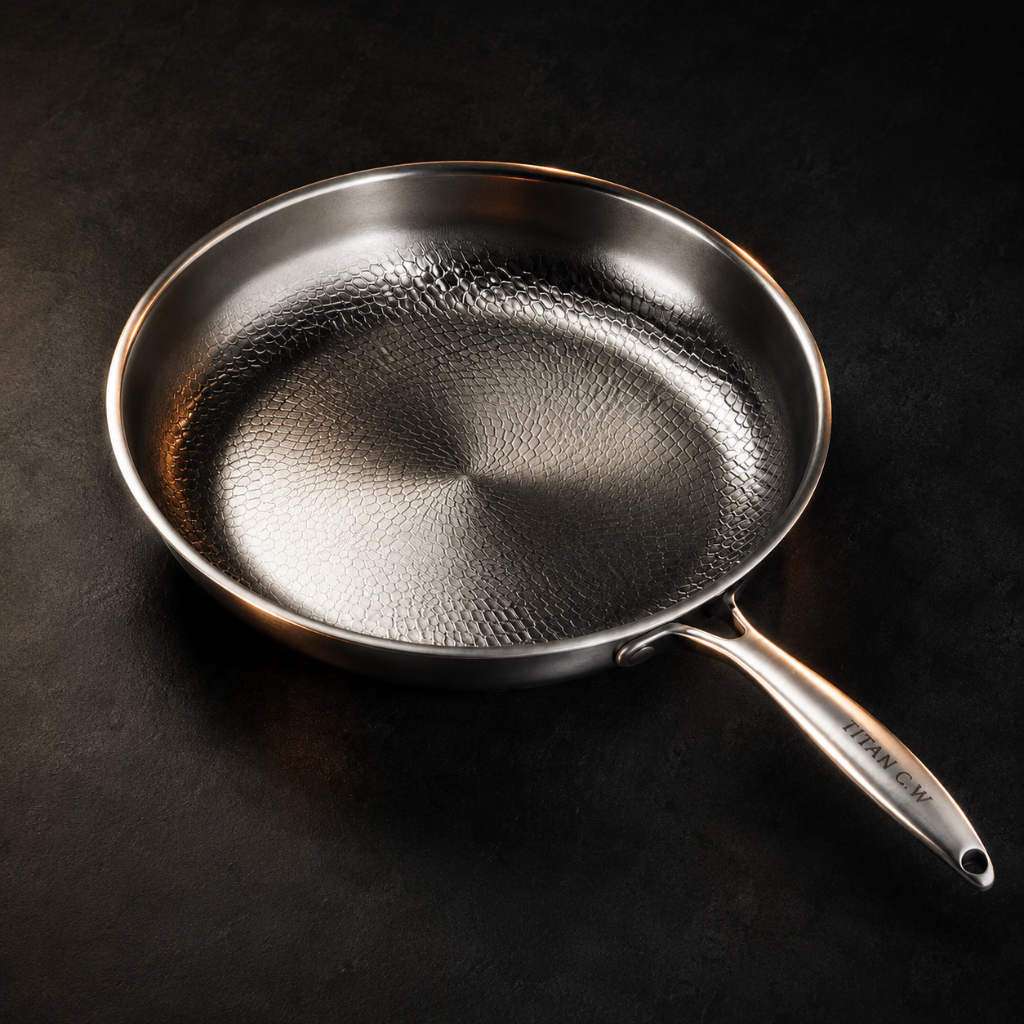
Titanium Frying Pan
A versatile titanium frying pan designed for everyday frying, searing and stovetop-to-oven cooking, with a durable cooking surface that does not rely on a traditional sprayed non-stick coating.

Titanium Wok
A high-sided titanium wok designed for stir-fries, noodles, fried rice and larger one-pan meals. The flat-base design is intended for use on compatible flat cooktops while the sloped sides give you room to toss, turn and move food.

Titanium Sauté Pan
A deeper titanium sauté pan designed for family meals, sauces, simmering and larger one-pan recipes. Two side handles make it easier to lift, carry and serve than a comparable long-handled pan.

Titanium Crepe Pan
A low-profile titanium pan designed for crepes, pancakes, eggs and flatbreads, with shallow edges that make it easier to reach, turn and slide delicate foods.
Build Your Own Titanium Set
Choose your pieces, select your sizes and create a titanium cookware set that fits the way you cook.
Build Your SetRelated Guides
Titanium Cookware Pros and Cons
Titanium cookware is extremely durable, lightweight, and free of synthetic coatings. The main drawbacks are price (solid titanium is expensive), a learning curve for food release, and the fact that titanium does not conduct heat as evenly as aluminium or copper. For most cooks, the trade-offs are worth it; for others, they may not be.
Titanium vs Stainless Steel Cookware
Stainless steel conducts heat better and is generally less expensive, while titanium is lighter, more durable, and completely free of coatings. Both are inert and safe for acidic foods. The right choice depends on your priorities: even heating and value favour stainless steel; light weight and lifetime durability favour titanium.
About the Author
Titan Cookwares Editorial Team