How to Cook Crepes on a Titanium Pan
Quick Answer
Preheat gently, lightly grease, and watch the edges. The first crepe is a calibration — use it to fine-tune heat and fat before the rest.
Quick Method
- 1.Preheat the pan on low-to-medium heat until warm.
- 2.Lightly grease with butter or a thin film of oil.
- 3.Pour a small ladle of batter and tilt to spread.
- 4.Watch the edges — when they lift and brown lightly, it is ready to flip.
- 5.Flip briefly, cook the second side, and slide onto a plate.
Why Crepes Can Stick
Crepes are thin batters cooked on a hot surface, and they can stick for the same reasons other foods do: insufficient heat, too little fat, or trying to flip before the batter has set. A titanium crepe pan or titanium frying pan can make good crepes with the right technique.
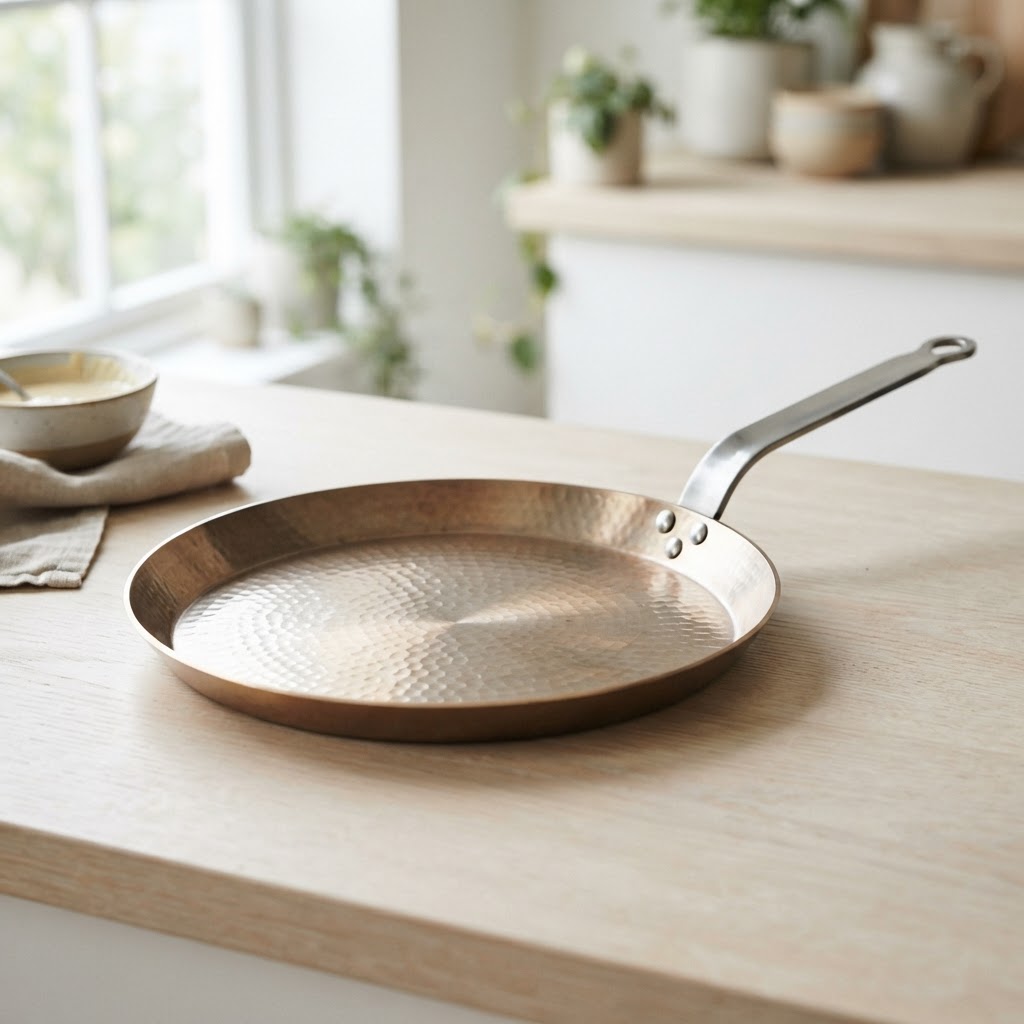
The crepe pan's low profile makes it easier to slide a spatula underneath and flip, which is helpful for delicate batters. A frying pan also works — the crepe pan is not necessary to make a crepe, but it can make the process easier.
Batter Readiness
Let crepe batter rest for at least 20-30 minutes before cooking. This lets the flour hydrate and the gluten relax, producing a smoother, more cohesive batter. A batter that is too thin will spread too far and tear; a batter that is too thick will not spread evenly.
The batter should pour easily and coat the back of a spoon. Adjust with a little more liquid or flour as needed before cooking.
Preheating
Preheat the pan on low-to-medium heat. See how to preheat a titanium pan for readiness cues. For crepes, a moderate, even heat is better than high heat — you want the batter to set gradually without scorching.
Lightly Greasing
Lightly grease the pan with butter or a thin film of oil before the first crepe. You can use a paper towel or brush to spread it evenly. A small amount is enough — too much fat will pool and create uneven spots.
You may not need to re-grease between every crepe, depending on your batter and heat. If crepes start sticking, add a small amount of fat before the next one. We do not claim that crepes can be cooked with zero fat on an uncoated surface — the right amount depends on your recipe and technique.
Adding and Spreading Batter
Pour a small ladle of batter into the centre of the pan and immediately tilt and rotate to spread it into a thin, even layer. Work quickly — the batter starts setting as soon as it hits the warm surface.
Watching Edge Cues
Watch the edges of the crepe. When the edges begin to lift slightly from the pan and the underside is lightly browned, the crepe is ready to flip. This usually takes a minute or two depending on the heat and batter thickness.
Flipping
Slide a thin spatula under the crepe, working around the edges to loosen it first. Flip in one smooth motion. The second side cooks quickly — usually less than a minute — since the crepe is already mostly set.
Adjusting Between Batches
The first crepe often helps you fine-tune your heat, fat level, and batter quantity. If the first crepe sticks, tears, or browns too quickly, adjust before the next one. This is normal and useful — the first crepe is a calibration tool, not a failure.
First-Crepe Troubleshooting
Use the table below to diagnose and adjust after your first crepe.
| Problem | Likely Cause | Adjustment |
|---|---|---|
| Crepe sticks and tears | Too little fat or pan not hot enough | Add a thin film of butter or oil and let the pan come up to temperature |
| Crepe browns too fast | Heat too high | Reduce heat and cook the next crepe more slowly |
| Batter spreads too thin and breaks | Batter too thin or pan too hot | Thicken batter slightly or reduce heat |
| Crepe is thick and uneven | Too much batter or not spread quickly | Use less batter and tilt the pan immediately to spread |
| Edges curl but centre is wet | Heat too high or flipped too early | Cook the first side a little longer before flipping |
Cleaning Sugar and Butter Residue
Sugar, butter, and sweet fillings can leave sticky residue. Let the pan cool, then soak in warm water with dish soap. For caramelised sugar residue, warm water and patience will loosen it — avoid aggressive scraping. See how to clean titanium cookware for full guidance.
Frequently Asked Questions
Do I need a crepe pan to make crepes?
No. A frying pan can make crepes. The crepe pan's low profile makes flipping easier, but it is not required. Use what you have.
Can I make crepes with no butter or oil?
We do not recommend it. A thin film of fat helps the crepe release and brown evenly. The amount depends on your recipe and technique.
Why does my first crepe always stick?
The first crepe is a calibration — it helps you fine-tune heat, fat, and batter. Adjust based on how it cooks and the next one will be better.
How do I know when to flip?
Watch the edges. When they lift from the pan and the underside is lightly browned, the crepe is ready to flip.
Why is my crepe tearing when I flip it?
The crepe may not be fully set, or there may be too little fat. Wait until the edges lift and the centre is set, and make sure the pan is lightly greased.
Related Products
Titanium Frying Pan
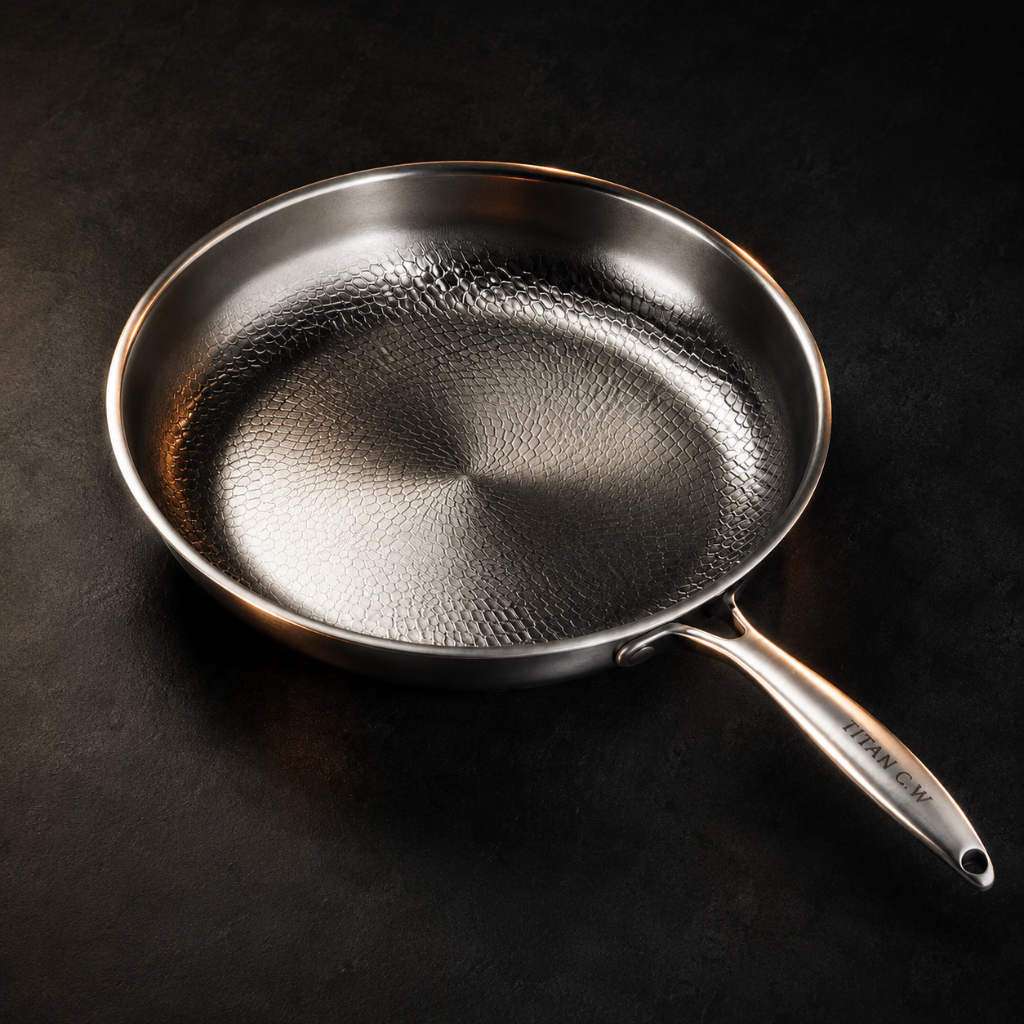
A versatile titanium frying pan designed for everyday frying, searing and stovetop-to-oven cooking, with a durable cooking surface that does not rely on a traditional sprayed non-stick coating.

Titanium Crepe Pan
A low-profile titanium pan designed for crepes, pancakes, eggs and flatbreads, with shallow edges that make it easier to reach, turn and slide delicate foods.
About the Author
Titan Cookwares Editorial Team